
World Sailing Official Case Book
Case 6
A starboard-tack boat that tacks after a port-tack boat has borne away to go astern of her does not necessarily break a rule.
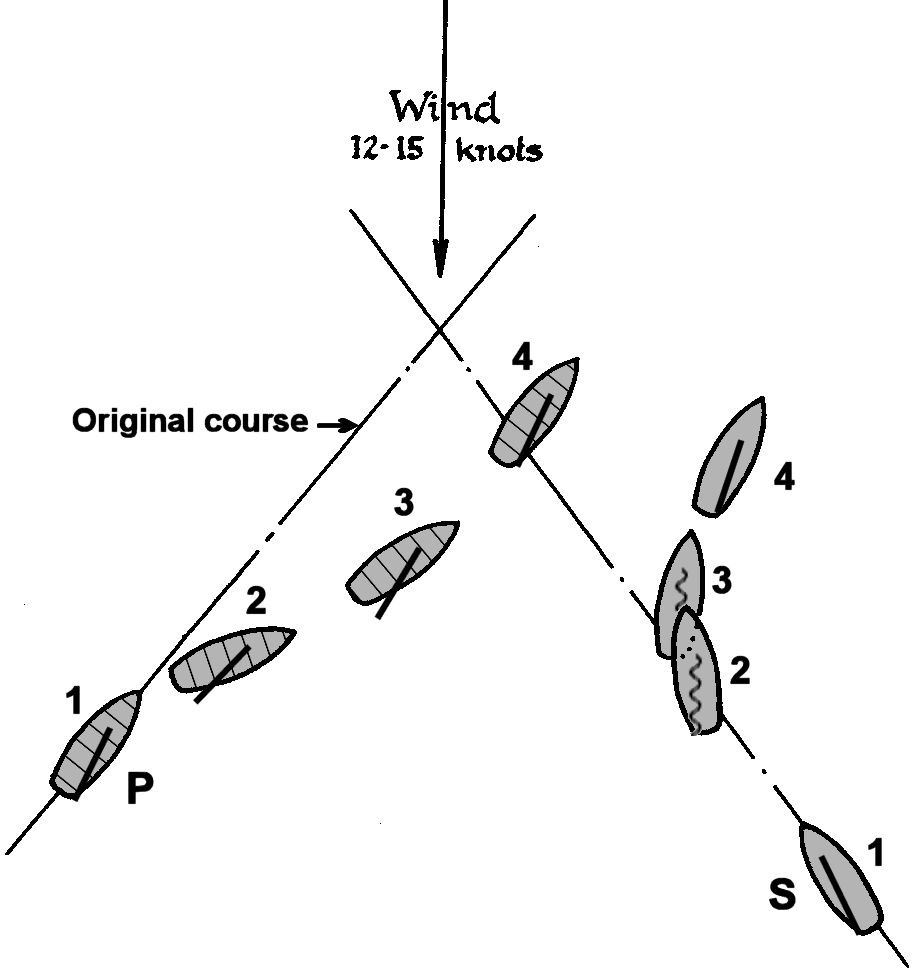
Facts
Between positions 1 and 2, P bore away to pass astern of S. A moment later S chose to tack. After sailing free for about a hull length, P resumed her close-hauled course, having lost about a hull length to windward, and passed S a hull length to windward of her. After S tacked, P’s luff to close-hauled was not caused by a need to keep clear of S. P protested S under rule 16.1. P claimed that, when S tacked after P had borne away to pass astern of S, S failed to give P room to keep clear. The protest committee disqualified S under rule 16.1. S appealed.
Decision
S’s appeal is upheld. She is to be reinstated. S was subject to rule 16.1 only while luffing from a close-hauled starboard-tack course to head to wind. During that time P had room to keep clear, and so S did not break rule 16.1. Rule 16.2 did not apply because it applies only when a boat in S’s position bears away. In this case, S luffed. At the moment S turned past head to wind, P became the right-of-way boat under rule 13, and rule 16.1 no longer applied to S. S kept clear of P as required by rule 13. No rule was broken by S.