World Sailing Official Case Book
Case 132
Interpretation of the phrase ‘on a beat to windward’.
Question
Rule 16.2 states that it applies between boats on opposite tacks on a beat to windward. Rule 18.1(a)(1) states that rule 18 does not apply between boats on opposite tacks on a beat to windward. For the purpose of these rules, when are boats on opposite tacks ‘on a beat to windward’?
Answer
Two boats on opposite tacks are ‘on a beat to windward’ when, after their starting signal,
- the course each of them would choose in order to sail the course as quickly as possible, in the absence of all other boats, is close-hauled or above, or
- one or both of them are overstanding a close-hauled layline to their next mark. (A boat on the windward side of a close-hauled layline to a leeward mark is not ‘overstanding’ that layline; she is ‘above’ that layline.)
examples
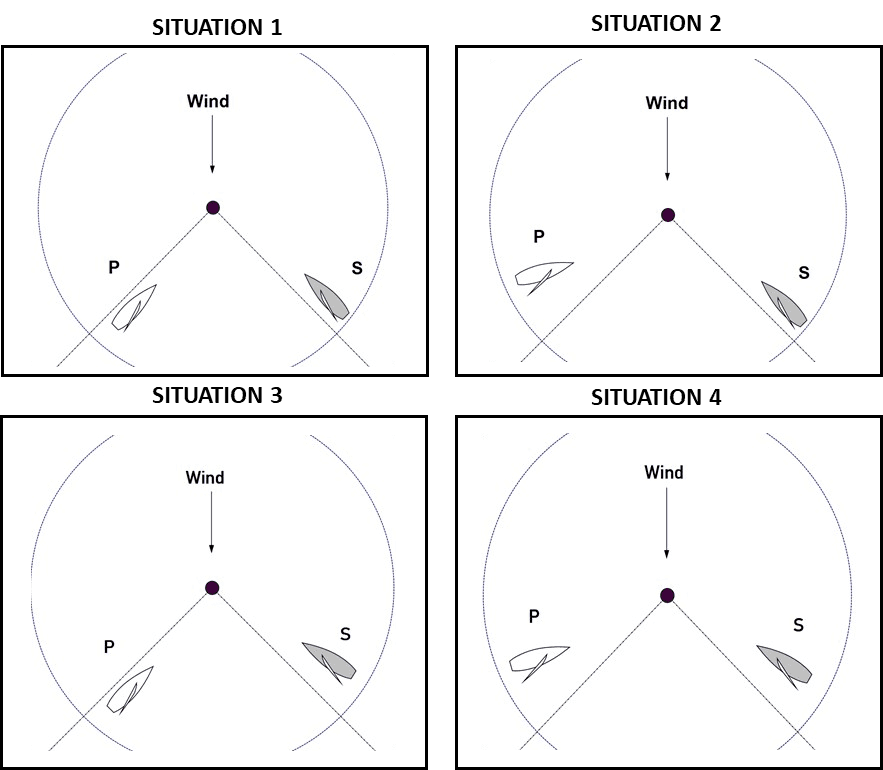
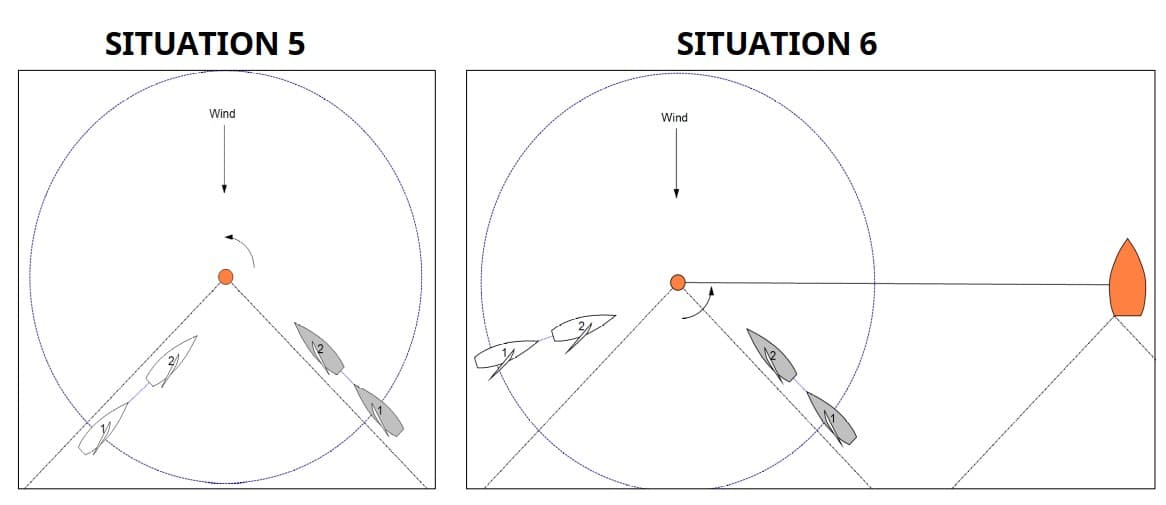
In each of the situations 1 to 6 that follow, the boats shown are on opposite tacks ‘on a beat to windward’ and are either below, on or overstanding a close-hauled layline to the next mark of their course. This mark may be a rounding mark, a passing or limit mark, a gate mark or a finishing mark.
Situations 5 and 6 illustrate two boats ‘on a beat to windward’ in the zone of a mark to be left to port. In situation 5 condition (1) applies and in situation 6 condition (2) applies.
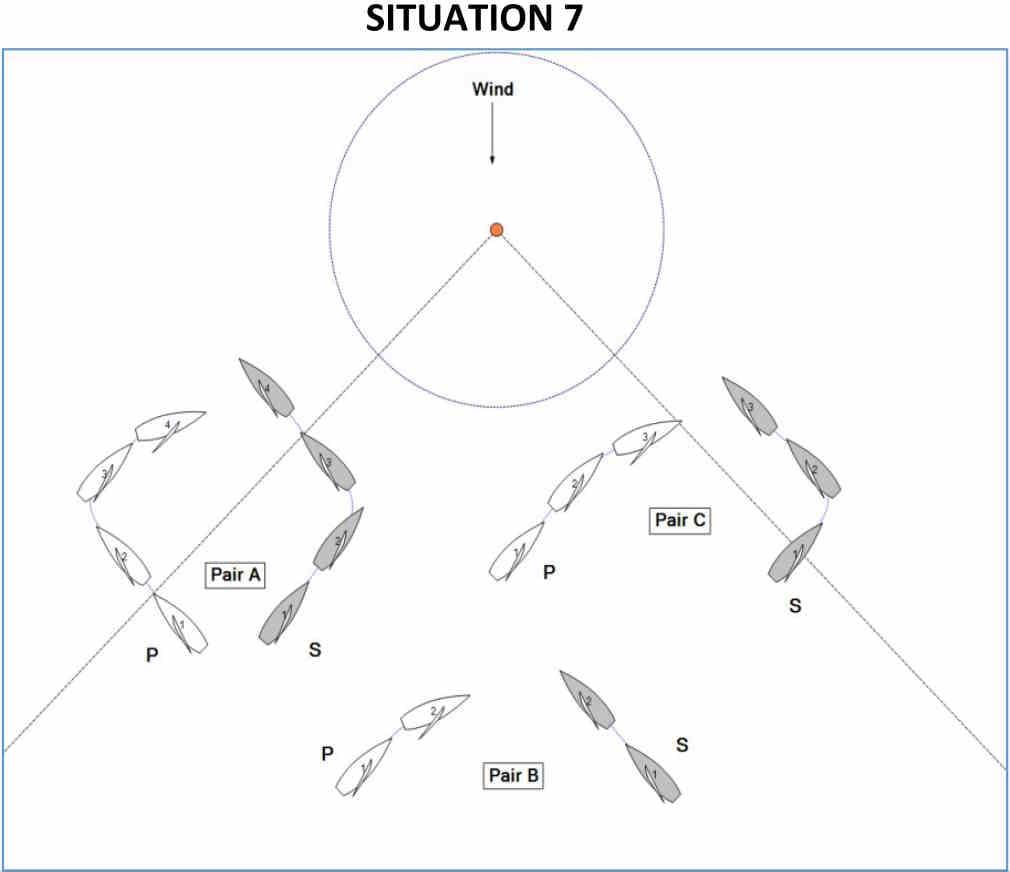
In situation 7 each pair of boats below is ‘on a beat to windward’ and the starboard-tack boats are each subject to rule 16.2.